


We apologise but there was a problem sending your message. Please contact customer support at [email protected]
January 16th 2026
To change our minds is often seen as a weakness, as though certainty were a virtue and doubt a failure. However, the ability to change your belief, the willingness to re-consider previously held beliefs, and ultimately, to admit that a belief has changed, shows us a person who possesses intellectual honesty. It indicates a person who has an eagerness to learn more about things, rather than a person who has a stubborn disposition or who is defensive about their beliefs. Our beliefs are not fixed entities; rather, they are influenced, changed or sometimes completely rejected when we come into contact with new concepts. For a great number of individuals, they will find that books serve as the starting point for these alterations in belief.
Books provide a unique experience, the opportunity to contemplate new ideas over an extended period of time without being pressured for immediate comment. Instead, they invite us to sit with an idea, to turn it over, and to question it. Sometimes it is a whole argument that challenges us; sometimes it is a single sentence that lingers long after the book is closed. Long after we think we have finished reading, the book is still quietly at work.
When we read, we step into someone else’s world. Stories are particularly powerful in this way. Fiction allows us to see the world through unfamiliar eyes and to inhabit lives that are not our own. When a character goes on their journey, we feel the ups and downs of their trials first-hand. This can change how we view real people. Stories about migration, poverty, injustice, or friendship make abstract issues feel personal and real. When we understand why a character acts as they do, we are often less quick to judge others in real life.
Non-fiction challenges us differently, but just as deeply. It encourages us to think critically, to weigh evidence, and to and to consider issues that may be uncomfortable. History reminds us that the stories we inherit are often incomplete. Science shows us that knowledge evolves. Philosophy and politics invite debate and disagreement, while also teaching us that disagreement does not have to mean hostility. Reading gives us insight into how much larger, richer, and more complex the world is than we experience.
Often it is only through books, that a reader has his or her mind changed, but at times books will do something more subtle, such as leave a reader with a question, or plant the seeds of ideas that will flourish over time. An idea we resist today may make sense to us later, after we have read more, thought more, and lived more. That slow process matters. Learning is rarely instant, and growth often begins with uncertainty.
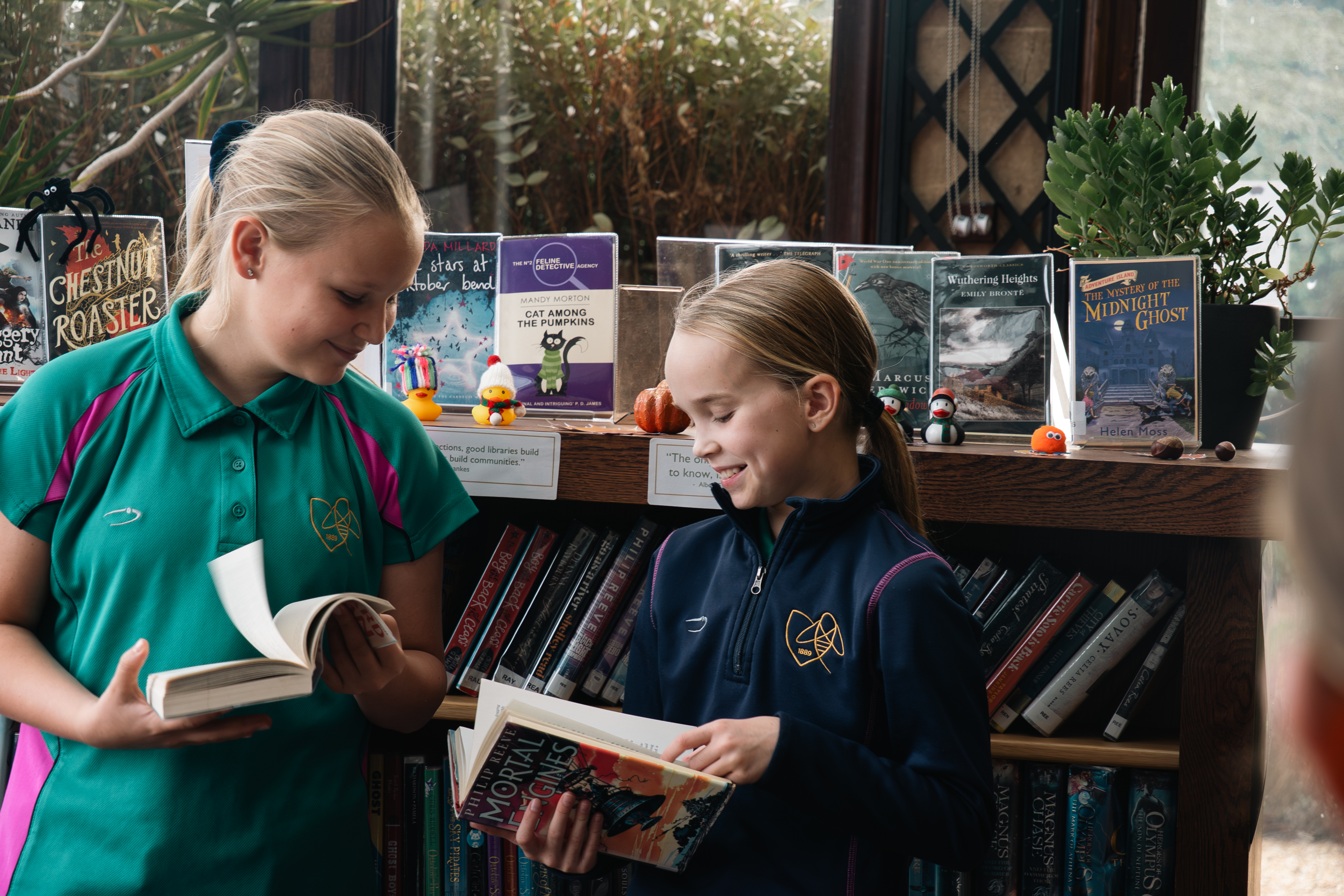
In 2026, the significance of this process will be extremely relevant as it marks the National Year of Reading. It’s an opportunity to celebrate books not as a task to be completed, but as a pleasure to be rediscovered. Throughout the year, the School and Library will provide events, activities and opportunities during the upcoming year to promote reading for enjoyment rather than measuring its value.
In schools, this matters profoundly. Reading is not just about literacy or being assessed; it is about being a reflective and compassionate thinker. Books ask us to listen carefully, to think deeply, and to remain receptive to what others are saying. In a world that often rewards loud opinions and fixed positions, books offer something quieter and more enduring: the opportunity to grow.
As we move journey through the National Year of Reading, let us make room for the books that we have chosen by ourselves rather than those that are required or assigned. Let us pick up stories that challenge and inspire us, surprise us, and allow ourselves the time to sit with ideas that may shift our thinking. By taking part in the reading opportunities offered throughout the year, we affirm that reading for pleasure matters and that changing our minds is part of how we grow.
Ms Cathi Woods, Librarian